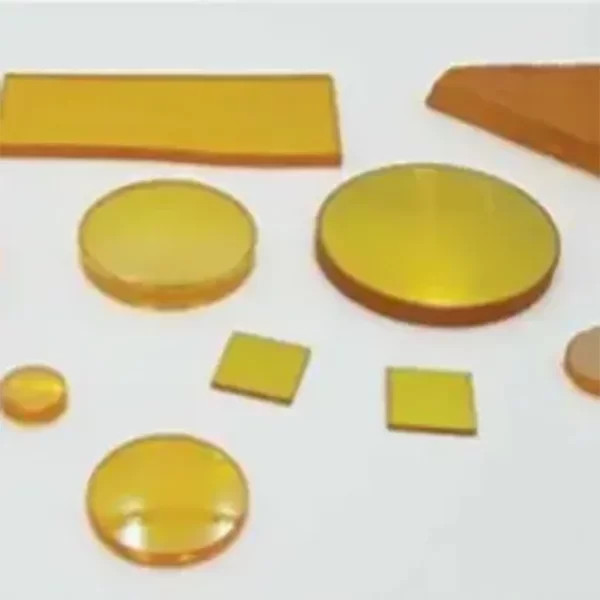
Zinc Sulfide (ZnS)
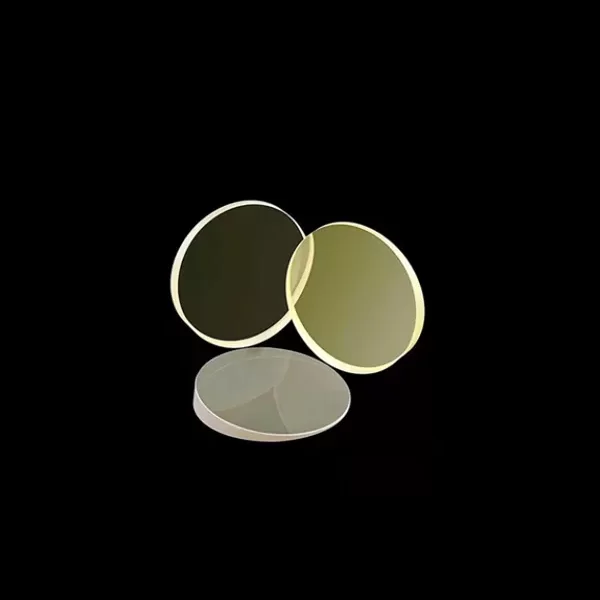
Crystal Structure and Properties
-ZnS crystallizes in two primary structures: zinc-blende (cubic) and wurtzite (hexagonal).
-It has a wide direct bandgap of 3.6 eV (zinc-blende) and 3.9 eV (wurtzite) at room temperature, making it suitable for applications in the ultraviolet (UV) and visible spectral regions.
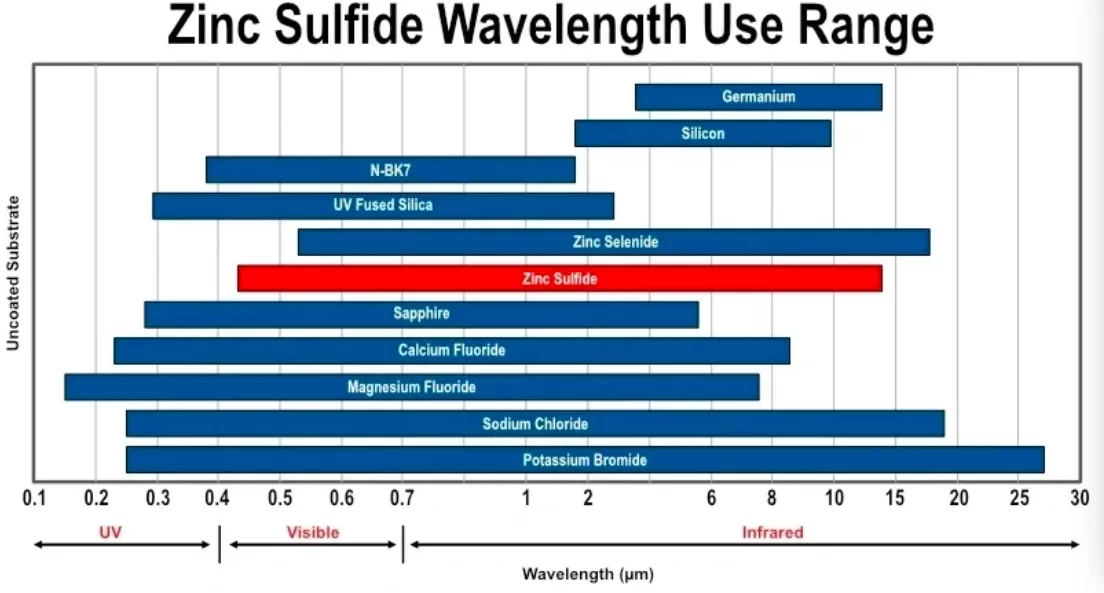
-ZnS exhibits high transparency in the visible and near-infrared regions, with a transmission range from 0.4 μm to 12 μm.
-It has a relatively high refractive index of approximately 2.35 in the visible range, which is useful for optical components requiring high refractive index materials.
-ZnS has good chemical stability and resistance to moisture, making it suitable for harsh environments.
Optical Applications
-UV Optics: ZnS is widely used for optics in the UV region, such as lenses, windows, and filters, due to its wide bandgap and good UV transparency.
-Optical Coatings: ZnS is commonly used as a material for optical coatings, such as antireflective coatings, high-reflective coatings, and beam splitters, in the visible and near-infrared regions.
-Scintillators: ZnS doped with certain activators (e.g., silver, copper) is used as a scintillator material for radiation detection and imaging applications.
-Electroluminescent Devices: ZnS is utilized in the fabrication of thin-film electroluminescent displays and lighting devices.
-Photocatalysis: ZnS nanoparticles and thin films are used as photocatalysts for various applications, such as water splitting, pollutant degradation, and solar energy conversion.
Fabrication and Processing
-ZnS can be grown as bulk single crystals using techniques like chemical vapor transport (CVT) and physical vapor transport (PVT) methods.
-Polycrystalline ZnS can be produced by sintering or hot-pressing processes.
-Thin films of ZnS can be deposited using various techniques, such as chemical vapor deposition (CVD), sputtering, and molecular beam epitaxy (MBE).
Challenges and Limitations
-ZnS has a relatively low thermal conductivity, which can limit its use in high-power applications or situations requiring efficient heat dissipation.
-ZnS is susceptible to degradation in certain chemical environments, particularly in the presence of strong acids or bases.